
Spot color separation
The most common type — each distinct color becomes its own screen. Best for logos, text designs and branded apparel with clean color boundaries. Typically 1–6 solid colors.
Press-ready spot color, CMYK process, and halftone/simulated-process color separations for screen printers. Files built with proper underbase, choke and spread, registration marks and channel structure — so the design prints clean on the first run, not after three test pulls.
Three types
Different print jobs need different approaches. Tell us your design and garment color during the quote — we'll recommend the right type and execute it.
The most common type — each distinct color becomes its own screen. Best for logos, text designs and branded apparel with clean color boundaries. Typically 1–6 solid colors.
Breaks the design into cyan, magenta, yellow and black channels — the standard for photo-realistic and full-color reproduction on white or light garments.
Dot patterns of solid spot inks reproduce gradients and photographic detail on dark or colored garments where CMYK doesn't work. The most technically complex type.
What's included
What we need from you
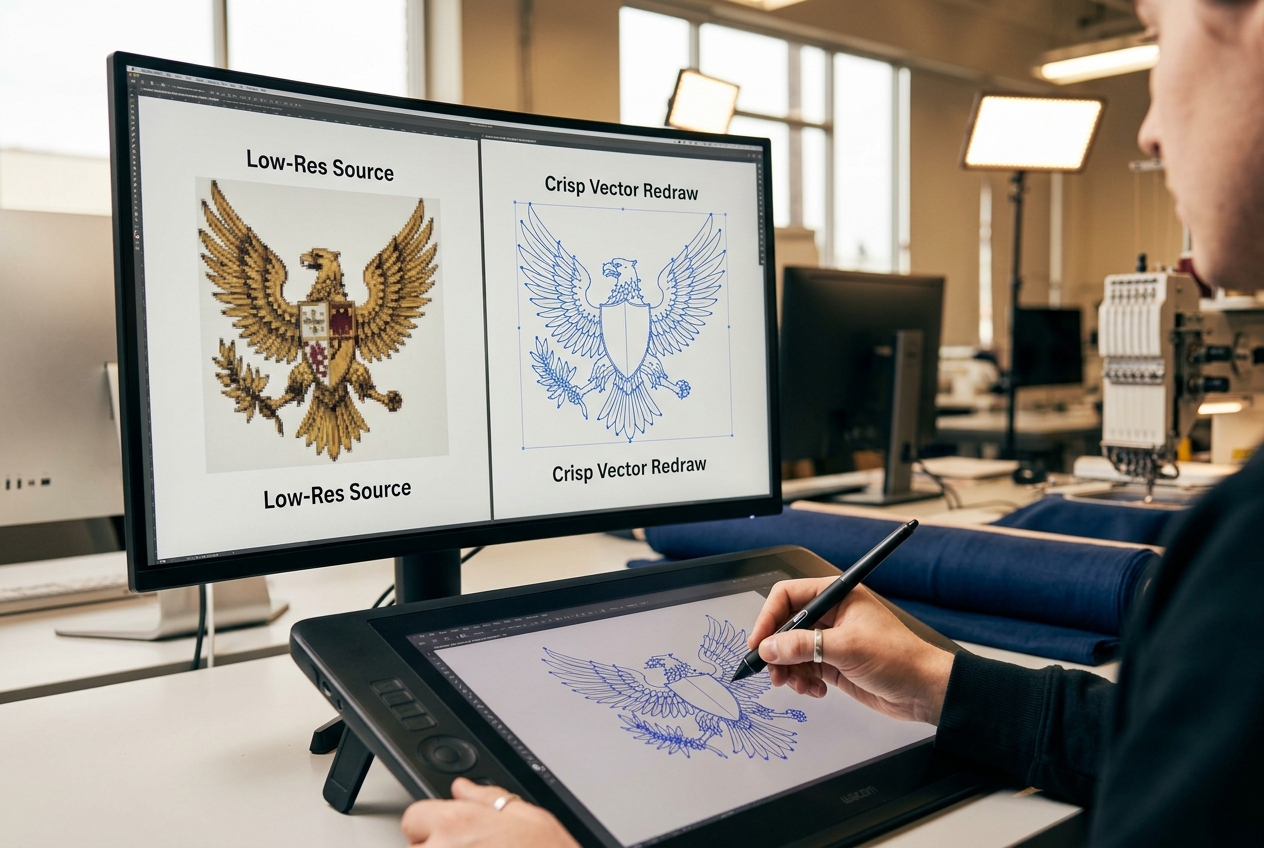
Starting from a JPG, PNG or low-resolution image? Our vector art service converts it to clean vector first — the two services often go together for the best result.
Simple, flat pricing
$12per design, flat
Two services, one order
$30typical combined, from
Quote8+ separations or specialty work
How it works
Include garment color and ink count with your design.
We respond within 24 hours with the right separation type.
Confirm the quote and share any Pantone codes needed.
Channels, underbase and registration built by hand.
Layered PSD plus film positives, with every component included.
Adjustments if anything needs to change before press.
Frequently asked questions
The process of breaking a design into individual color channels, each becoming its own screen on press. Done right, it produces clean, accurately registered prints on the first run instead of after multiple test pulls.
Spot color gives each solid color its own screen — best for logos and clean color boundaries, typically 1–6 colors. CMYK process blends cyan, magenta, yellow and black for photo-realistic full-color prints on white or light garments. Halftone uses dot patterns of solid inks to fake gradients and photo detail on dark garments, where CMYK doesn't work.
$12 per design for most separation work, covering spot, CMYK and halftone. Complex multi-layer designs with 8+ separations or specialty techniques may quote higher.
8–12 hours from approved quote to delivered press-ready files.
A layered Photoshop PSD with each color on its own channel, plus press-ready film positives as PDF or TIFF at 300 DPI or higher.
Yes, though vector source files (AI, EPS, SVG, vector PDF) give the cleanest result. For low-resolution raster art, we may recommend a quick vector conversion first.
Yes — underbase white separation, choke and spread settings, and registration and trap details are included whenever the garment color requires it.
Yes — deliverables are standard press-ready film positives and layered files compatible with any screen printing shop's setup. Pantone callouts are included on every separation for accurate ink matching.
Customer reviews

★★★★★
Their vector redraw saved a rush order of 500 shirts — the separations came back press-ready.
★★★★★
Halftone separation on a black hoodie design that would've cost us three test pulls elsewhere — clean on the first press.
Free quote — no strings
Send your design, garment color and ink count. We'll respond within 24 hours with a quote and recommendation.